
WEDDING

Suit & Outfit Matching Guide

Choose the right suit color, outfit details, and styling approach for any wedding setting.
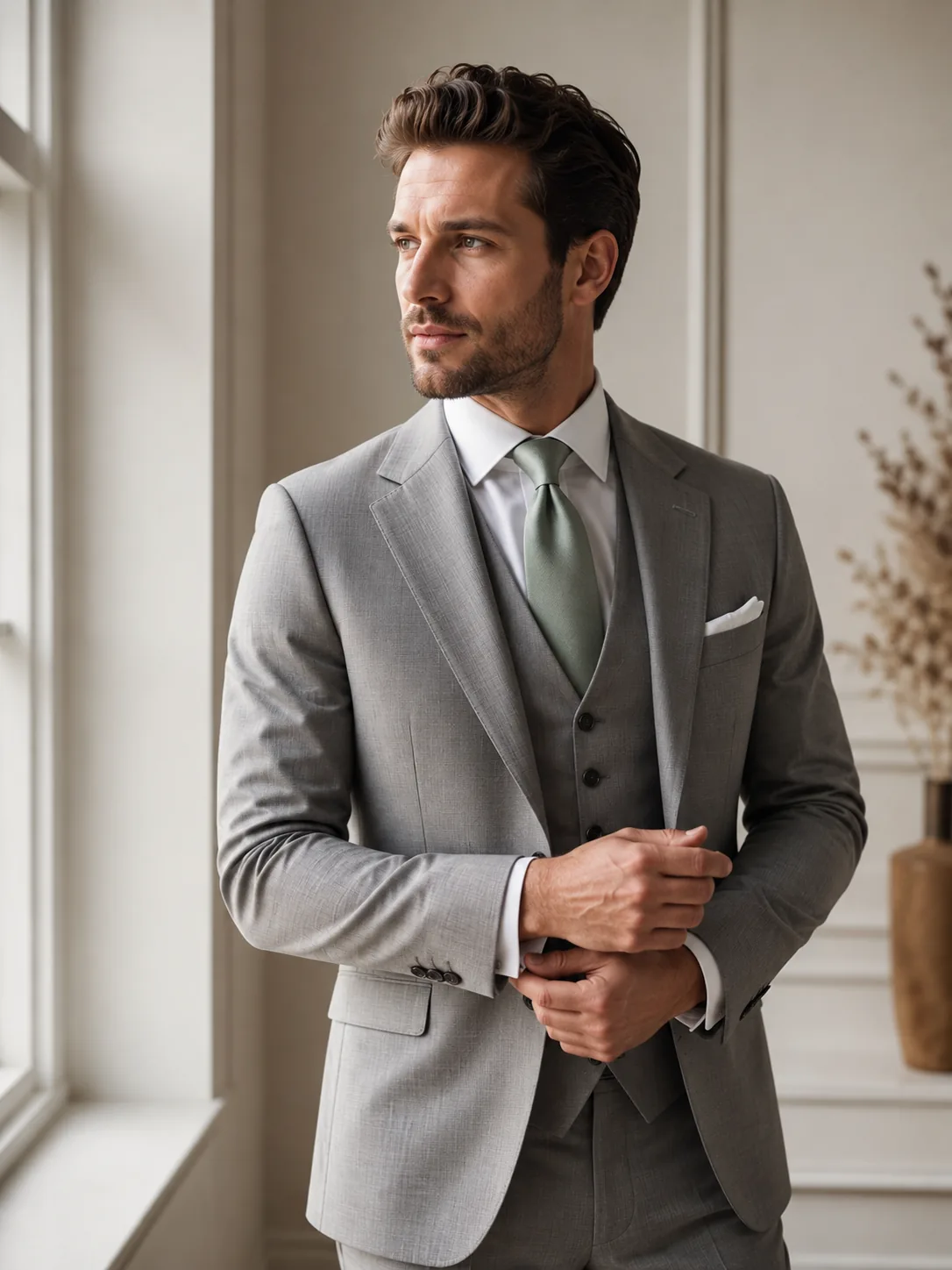
Man wearing a grey wedding suit with a soft green tie

Overview

A wedding suit should fit the whole occasion.

Choosing a wedding suit is not only about personal taste. The best color and styling direction also respect the season, venue, formality, wedding palette, cultural expectations, comfort, and how the outfit will photograph throughout the day.

Contents

Use this guide as a quick styling map.

Suit Color Basics

Start with formality, palette, and light.

A strong wedding outfit works with the room, the photos, and the couple's color direction.

  • Darker suits usually read more classic, formal, and evening-ready.
  • Lighter suits feel natural for daytime ceremonies, warm weather, and outdoor venues.
  • Neutrals such as navy, grey, tan, black, and brown are the easiest to style across wedding palettes.
  • The suit color should support the event palette instead of pulling attention away from it.
  • Think about how the color will photograph in the actual venue lighting.

Season

Wedding suit colors by season.

Use season as a starting point, then adjust for venue, dress code, and the couple's palette.

Spring Wedding Suit Colors

Light blue, light grey, tan or khaki, and navy.

Spring weddings usually work best with fresh, softened color. Keep the outfit polished, but let the palette feel lighter than a winter formal look.

Summer Wedding Suit Colors

Tan, beige, light grey, breathable fabrics, and cream or white only when the setting makes it appropriate.

Summer styling should account for heat first. Lighter colors and airy fabrics help the outfit look clean without feeling heavy outdoors.

Fall Wedding Suit Colors

Burgundy, deep navy, medium to dark grey, brown, olive, and sage tones.

Fall weddings can carry richer color. Warm, grounded shades pair well with changing leaves, wood details, candlelight, and deeper floral palettes.

Winter Wedding Suit Colors

Black, charcoal, navy, and deep burgundy.

Winter weddings often lean more formal, especially in the evening. Deeper tones feel sharp, seasonal, and strong in low light.

Venue

Choosing suit colors by venue.

The same suit color can feel different on a beach, in a ballroom, or under warm barn lighting.
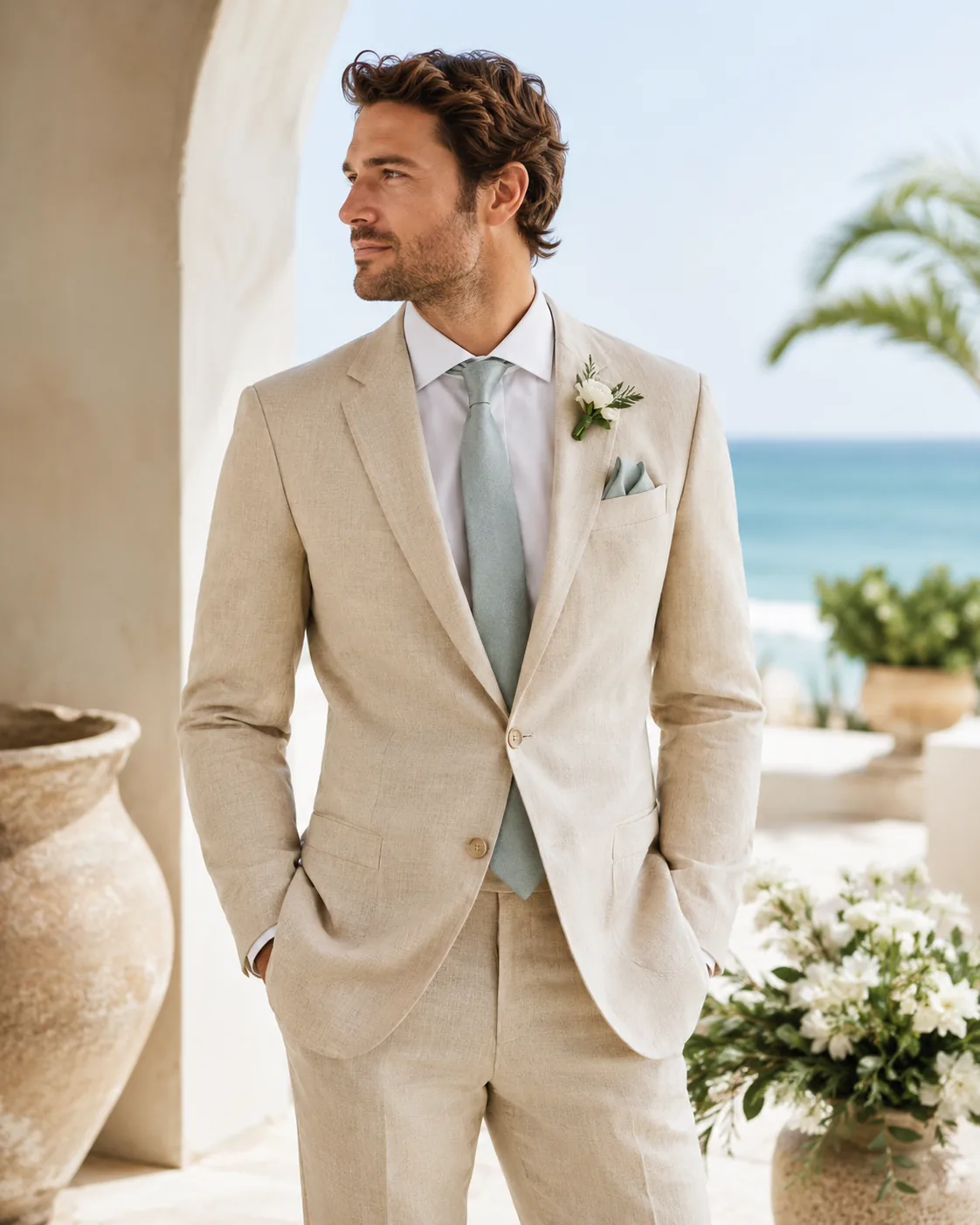
Man wearing a beige suit for a beach or destination wedding

Beach / Destination Weddings

Tan, beige, light grey, cream, and light blue are natural choices for seaside settings. Choose breathable fabrics, relaxed tailoring, and polished accessories; very heavy dark suits can feel out of place in hot outdoor conditions.

Garden / Outdoor Weddings

Navy, light grey, tan, olive, sage, and soft neutrals work well around greenery. The goal is to complement the landscape and wedding palette without clashing with florals or natural backdrops.

Ballroom / Formal Venue Weddings

Black, navy, charcoal, midnight blue, and deep burgundy suit refined indoor venues. Structured tailoring, polished dress shoes, and elevated accessories help the look match the room.

Rustic / Barn Weddings

Brown, charcoal, navy, olive, burgundy, and textured fabrics sit comfortably with wood, greenery, and warm lighting. Skip anything too glossy or overly corporate.

Dress Code

Wedding formality and suit color.

Dress code narrows the color range. Daytime weddings usually allow lighter colors, while evening weddings usually call for darker and more formal options.

Black Tie / Formal Weddings

Start with a black tuxedo or midnight blue tuxedo. A charcoal or very dark suit can work only when the invitation and couple make that acceptable.

Semi-Formal Weddings

Navy, charcoal, medium grey, and brown are reliable. Burgundy accents can add depth when they suit the palette and season.

Casual Weddings

Tan, light grey, light blue, and olive can feel relaxed without becoming careless. The outfit should still look intentional from shoes to shirt.

Traditions

Cultural considerations can shape the right color.

Wedding traditions may give certain colors symbolic meaning, and some ceremonies may prefer traditional, modest, or family-guided choices. White or cream suits are not appropriate in every wedding context. When the dress code is unclear, ask the couple, a family contact, or the wedding planner before choosing a color that could carry special meaning.

Color Breakdown

Complete color breakdown with styling tips.

Compare the safest uses, styling direction, and moments to avoid for each suit color family.

Black

Best for
Formal and evening weddings.
Style with
White shirt, black tie, or restrained formal accessories.
Avoid
Casual daytime weddings and very hot outdoor settings.
Notes
Best when the dress code or venue is clearly elevated.

Navy

Best for
Almost any wedding setting.
Style with
White or light blue shirt with neutral or palette-aware accessories.
Avoid
Very rustic casual settings where it may feel too polished.
Notes
A versatile choice that photographs well in most lighting.

Grey

Best for
Year-round weddings, depending on shade.
Style with
White shirt for formality or softer shirts and accessories for relaxed events.
Avoid
A shade that blends too closely with the wedding party if you are a guest.
Notes
Light grey suits spring, summer, and daytime. Medium grey is flexible. Charcoal fits formal, evening, and winter weddings.

Brown

Best for
Fall weddings, rustic venues, and outdoor celebrations.
Style with
White, blue, ivory, or soft pink shirts depending on the season.
Avoid
Overly formal black tie settings unless the couple invites a warmer palette.
Notes
Tan and khaki suit warm daytime events. Medium brown fits rustic or fall weddings. Dark brown can work for semi-formal fall or winter occasions.

Colorful suits

Best for
Stylish weddings where personality is welcome.
Style with
Neutral shirts and simple accessories.
Avoid
Conservative ceremonies or unclear dress codes.
Notes
Burgundy shines in fall and winter. Olive or sage fits outdoor and rustic venues. Blue ranges from light summer tones to deeper formal shades.

White / Cream

Best for
Tropical destinations, summer celebrations, and specific cultural contexts.
Style with
Light shirts and subtle accessories.
Avoid
Traditional weddings where white is reserved for the bride unless the couple approves.
Notes
Beautiful in the right context, but it needs clear permission and the right setting.

Mistakes

Common suit color mistakes to avoid.

  • 01

    Wearing white or cream without checking whether it is appropriate.

  • 02

    Choosing a color too close to the wedding party when attending as a guest.

  • 03

    Wearing extremely bright colors that distract from the couple.

  • 04

    Ignoring season, venue, temperature, or ceremony timing.

  • 05

    Choosing colors that clash with the wedding palette.

  • 06

    Prioritizing uniqueness over respect for the occasion.

Final Choice

Finding your best wedding suit color.

The right suit color balances wedding formality, season, venue, palette, comfort, and personal style. A fitting appointment can help you choose the suit, shirt, tie, pocket square, and finishing details that feel right for the occasion and still feel like you.

Styling Support

Find the Right Wedding Look

Our styling team can help you choose the suit color, accessories, and outfit details that match the wedding, venue, and season.

FAQ

Quick answers before choosing the suit.

What is the safest suit color for a wedding?
Navy and medium grey are usually the safest because they work across many venues, seasons, and dress codes. Charcoal is a stronger choice for formal or evening weddings.
Can I wear a black suit to a wedding?
Yes, especially for evening, formal, or indoor weddings. For daytime outdoor celebrations, a black suit can feel heavy unless the invitation calls for it.
What suit color is best for a summer wedding?
Tan, beige, light grey, and light blue are strong summer options. Breathable fabric matters as much as color when the ceremony is outdoors.
What suit color works best for a beach wedding?
Beige, tan, light grey, cream, and light blue usually fit beach settings best. Keep the look relaxed, clean, and comfortable in warm weather.
Should my suit match the wedding colors?
It should coordinate with the palette, not copy it exactly. Use the suit as the base and let ties, pocket squares, socks, or boutonnieres carry smaller color connections.
Can guests wear cream or white suits?
Only when the couple, planner, dress code, or cultural context makes it clear that white or cream is welcome. When unsure, choose another light neutral.
Suit & Outfit Matching Guide | SleekSync